竹 stroke order
Stroke by stroke
- 1
- 2
- 3
- 4
- 5
- 6
How 竹 is built
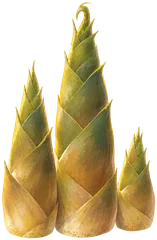
A picture: Two stalks of bamboo.
In a sentence
这把椅子是用竹做的。
This chair is made of bamboo.
熊猫以竹为食。
Pandas feed on bamboo grass.
她在新竹唸大学,每天都要骑车穿过竹科上课。
She studies at a university in Hsinchu and has to ride through the Hsinchu Science Park to get to class every day.
Written with AI or from Tatoeba (CC BY 2.0 FR), checked by our reader.
Words with 竹
- 竹子 zhúzi bamboo
- 爆竹 bàozhú firecracker
- 竹竿 zhúgān bamboo pole
- 胸有成竹 xiōngyǒu-chéngzhú to have a well-thought-out plan
HSK 1 · Now read them in a real story
十两饺子 Ten liang of dumplings

莎拉
饭馆
莎拉
老板
How do you write 竹?
竹 (zhú) has 6 strokes. Watch them drawn in order, then trace it on the printable sheet.
What are the stroke order rules?
Top before bottom and left before right. Across before down (十), and left-falling before right-falling (人). Outside before inside, but close the box last (国). The middle before its two sides (小).
Why does stroke order matter?
Characters written in order look right, are faster to write, and are easier to remember. Handwriting input on a phone also reads strokes in their order.
Where do these strokes come from?
Make Me a Hanzi, drawn from Arphic’s fonts (Arphic Public License). Its order follows mainland China’s standard; Taiwan and Hong Kong write a few characters in another order.
How does Chinese writing work?
Each character is one syllable, most are built from a part that hints at the meaning and a part that hints at the sound, and the 1,000 most common make up 89% of the characters on a page. More in How Chinese writing works.
More free tools

Strokes from Make Me a Hanzi (Arphic Public License), and its parts from its dictionary (LGPL). Meanings from our own dictionary, or Unicode’s Unihan for a character it doesn’t read.